Walk into a factory floor today and, honestly, it doesn’t look all that different from one ten years ago at least not at first glance. Same machines, same noise, same smell of metal and oil. But look a little closer and you’ll notice something’s changed. There’s a sensor here, a camera there, a screen in the corner quietly flagging something before a human even notices it. That’s AI in manufacturing doing its thing, mostly behind the scenes, mostly without anyone making a big deal of it.
And that’s kind of the point. The best implementations don’t announce themselves. They just… work.
Why Manufacturers Are Actually Paying Attention Now
For years, “AI in factories” sounded like something out of a trade show pitch flashy, theoretical, maybe ten years away. Not anymore. Smart factory technology has quietly moved from pilot programs into daily operations, and the reason is pretty simple: it saves money, and it saves time, and in manufacturing, both of those things are everything.
Margins in production are tight. A few hours of unplanned downtime can wipe out a week’s worth of profit. So when a tool comes along that genuinely reduces those costly surprises, factories don’t need much convincing. They just need proof it works and at this point, there’s plenty of it.
Predictive Maintenance AI: The Quiet Game-Changer
If there’s one application that’s done more to win manufacturers over than anything else, it’s predictive maintenance AI. Old-school maintenance worked one of two ways: fix it after it breaks, or replace parts on a fixed schedule whether they need it or not. Both are wasteful in their own way one costs you downtime, the other costs you money on parts that still had life left in them.
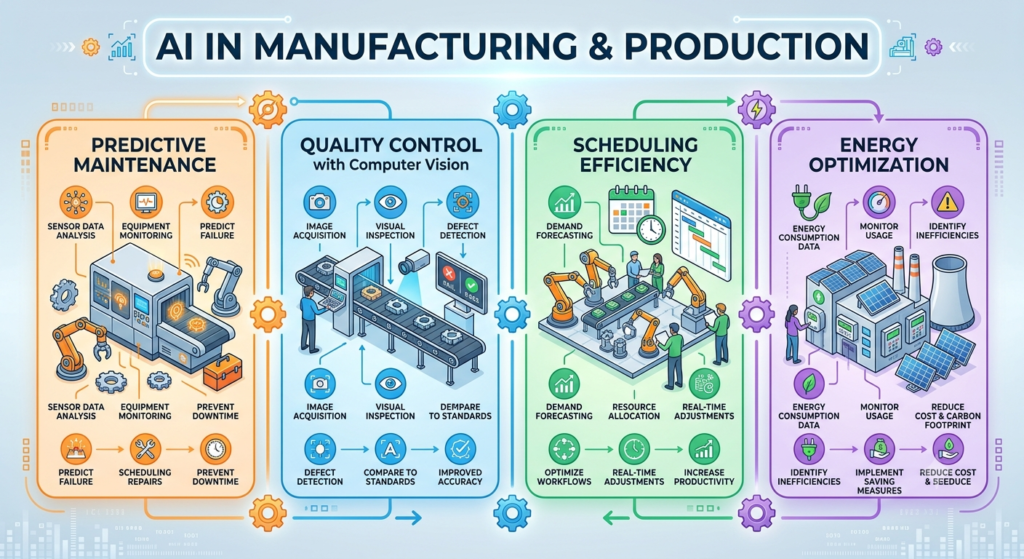
How AI predicts equipment failures in factories comes down to pattern recognition, really. Sensors collect constant data vibration, temperature, sound, pressure and machine learning models learn what “normal” looks like for that specific machine. The moment something drifts outside that pattern, even subtly, the system flags it. Not after the machine breaks down. Before.
That distinction matters more than people realize. A motor that’s about to fail doesn’t usually fail instantly it gives off small signs days or even weeks ahead of time. Humans miss those signs constantly. Algorithms, generally speaking, don’t.
A Quick Example of How This Plays Out
Picture a conveyor belt motor running at a slightly higher temperature than usual, just a degree or two. On its own, that means nothing to a human walking the floor. But a model trained on months of sensor data notices the deviation immediately and cross-references it against known failure patterns. A maintenance alert goes out. A technician checks it during a scheduled break instead of during an emergency shutdown. That’s the whole value proposition, right there.
How Smart Factories Use AI for Efficiency Beyond Maintenance
Maintenance gets most of the attention, sure, but it’s far from the only place AI is making a dent. How smart factories use AI for efficiency stretches across nearly every part of the production line these days.
Quality control is one of the bigger wins. Computer vision systems can spot defects on a moving line faster and often more consistently than a human inspector staring at the same product for an eight-hour shift. Fatigue doesn’t affect a camera the way it affects a person.
Then there’s scheduling and supply chain coordination. AI models can predict demand fluctuations, adjust production schedules accordingly, and flag potential material shortages before they actually become a problem on the floor. It’s less about replacing human judgment and more about giving people better information faster than they’d ever gather it manually.
Energy usage gets optimized too, which doesn’t sound exciting until you see the utility bill difference at scale. Small adjustments slightly altering machine run times, balancing loads across shifts add up fast in a facility running 24/7.
The Human Side Nobody Talks About Enough
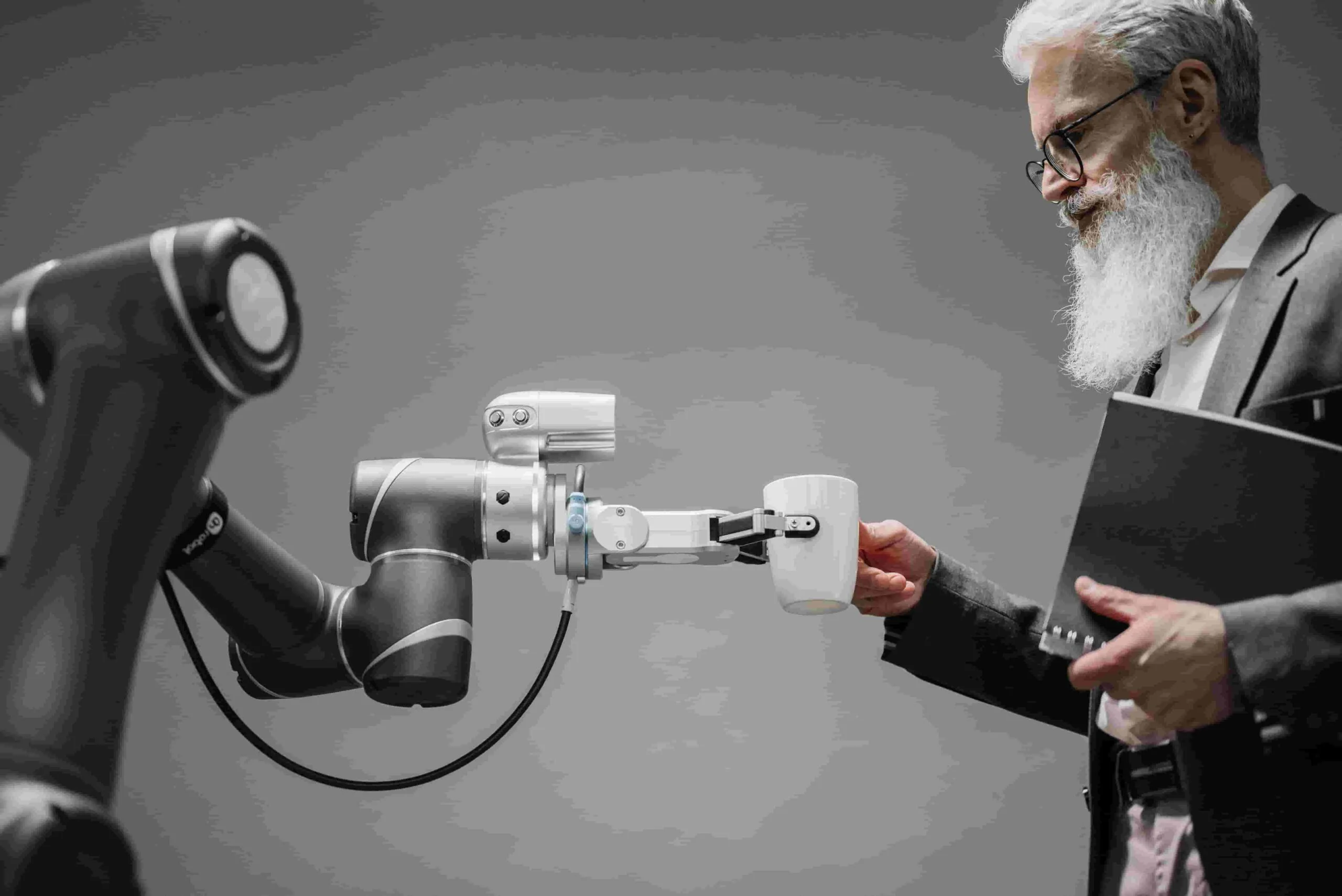
Here’s something that gets glossed over a lot: none of this works without people. AI in manufacturing isn’t about emptying out the factory floor; it’s about giving the people still on it better tools. Technicians spend less time guessing and more time acting on solid information. Engineers spend less time crunching numbers manually and more time actually solving problems.
That shift in role from reactive to proactive tends to be the part workers actually appreciate once they get past the initial skepticism. Nobody enjoys being surprised by a machine failure at 2 a.m. Fewer surprises, generally speaking, makes for a better shift.
What This Means for Smaller Manufacturers
A common assumption is that this stuff is only for massive operations with deep pockets. That’s becoming less true by the year. Cloud-based platforms and more affordable sensor hardware have brought smart factory technology within reach of mid-sized and even smaller manufacturers. You don’t need a research department anymore you need a decent internet connection and a willingness to start small, maybe with one production line before scaling further.
Conclusion
AI in manufacturing has moved well past the experimental phase it’s just how modern factories operate now, quietly running in the background, catching problems before they turn expensive. Predictive maintenance alone has changed how plants think about downtime, and the efficiency gains in quality control, scheduling, and energy use only add to the case. None of it replaces the people on the floor; if anything, it makes their jobs a little less chaotic. For manufacturers still on the fence, the question isn’t really whether to adopt this stuff anymore. It’s how soon.
FAQs
1. Is AI only useful for large manufacturing companies? Not really, not anymore. Costs have dropped enough that smaller manufacturers can start with one line or one process and expand from there.
2. How does predictive maintenance AI actually detect failures before they happen? It tracks sensor data temperature, vibration, sound over time and learns what “normal” looks like. Once readings drift from that baseline, it raises a flag, often weeks before an actual breakdown.
3. Does adopting AI in manufacturing mean fewer jobs on the floor? Generally, no. Most implementations shift workers toward higher-value tasks rather than eliminating roles outright technicians end up reacting less and planning more.
4. What’s usually the first step for a factory looking to adopt this technology? Most start small. A single predictive maintenance pilot on one critical machine is a common entry point before scaling to the whole facility.
5. Can AI really improve quality control compared to human inspectors? In a lot of cases, yes computer vision systems don’t get tired or distracted the way people naturally do over long shifts, which makes defect detection more consistent.