A decade ago, even the most optimistic tech researchers were cautious about how quickly artificial intelligence would actually mature. And yet here we are AI is writing code, catching tumors in medical scans, and quietly running large chunks of how modern businesses operate. The future of AI technology arrived faster than the predictions said it would.
So what comes next? That’s the question worth sitting with.
Because if the last ten years caught most people off guard, the next ten are shaping up to be even more disorienting in the best possible way, mostly.
The Engine Behind All of This
Before getting into specific trends, it helps to understand why AI keeps accelerating instead of plateauing.
Three things are compounding on each other: processing power keeps getting cheaper, the volume of data being generated worldwide keeps growing, and the algorithms themselves keep getting more efficient. Each improvement feeds the next one. It’s not a straight line it’s closer to a snowball rolling downhill and picking up mass as it goes.
That’s why artificial intelligence trends that seemed speculative three years ago are already showing up in real products people actually use.
Generative AI We Haven’t Seen Anything Yet
Most people discovered generative AI through chatbots and image generators. Those tools are genuinely impressive. They are also, by future standards, going to look primitive.
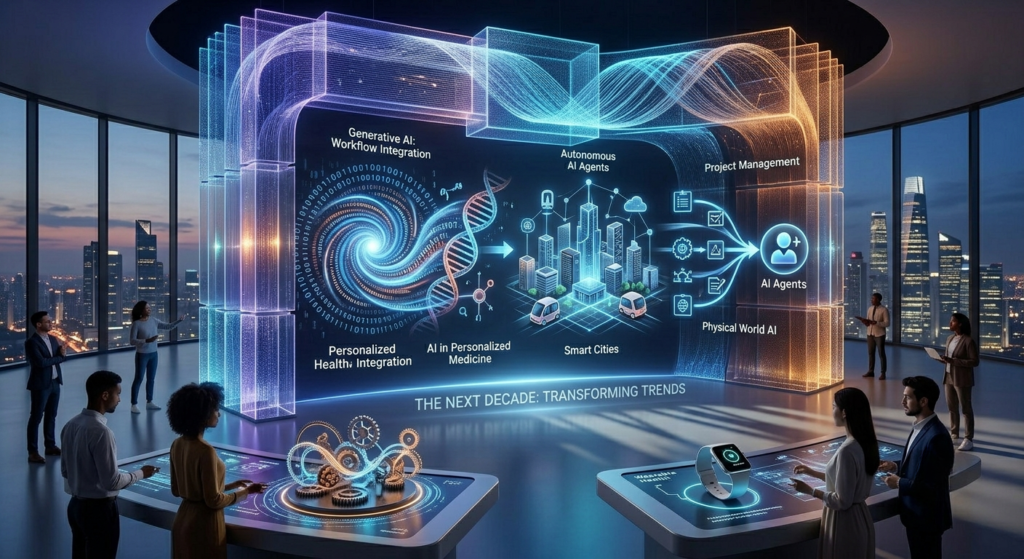
The next wave of generative AI will be more accurate, more context-aware, and embedded much more deeply into everyday professional workflows. Think less “I’ll ask the AI to write this for me” and more “the AI already drafted it while I was in a meeting.” For businesses, this means content, communications, and even software development moving significantly faster than they do today.
This is one of the emerging AI technologies to watch most closely not because it’s flashy, but because it’s already changing what a small team can accomplish without additional headcount.
AI Agents Are a Bigger Deal Than People Realize
Here’s something most coverage of AI underplays: the shift from AI that responds to AI that acts.
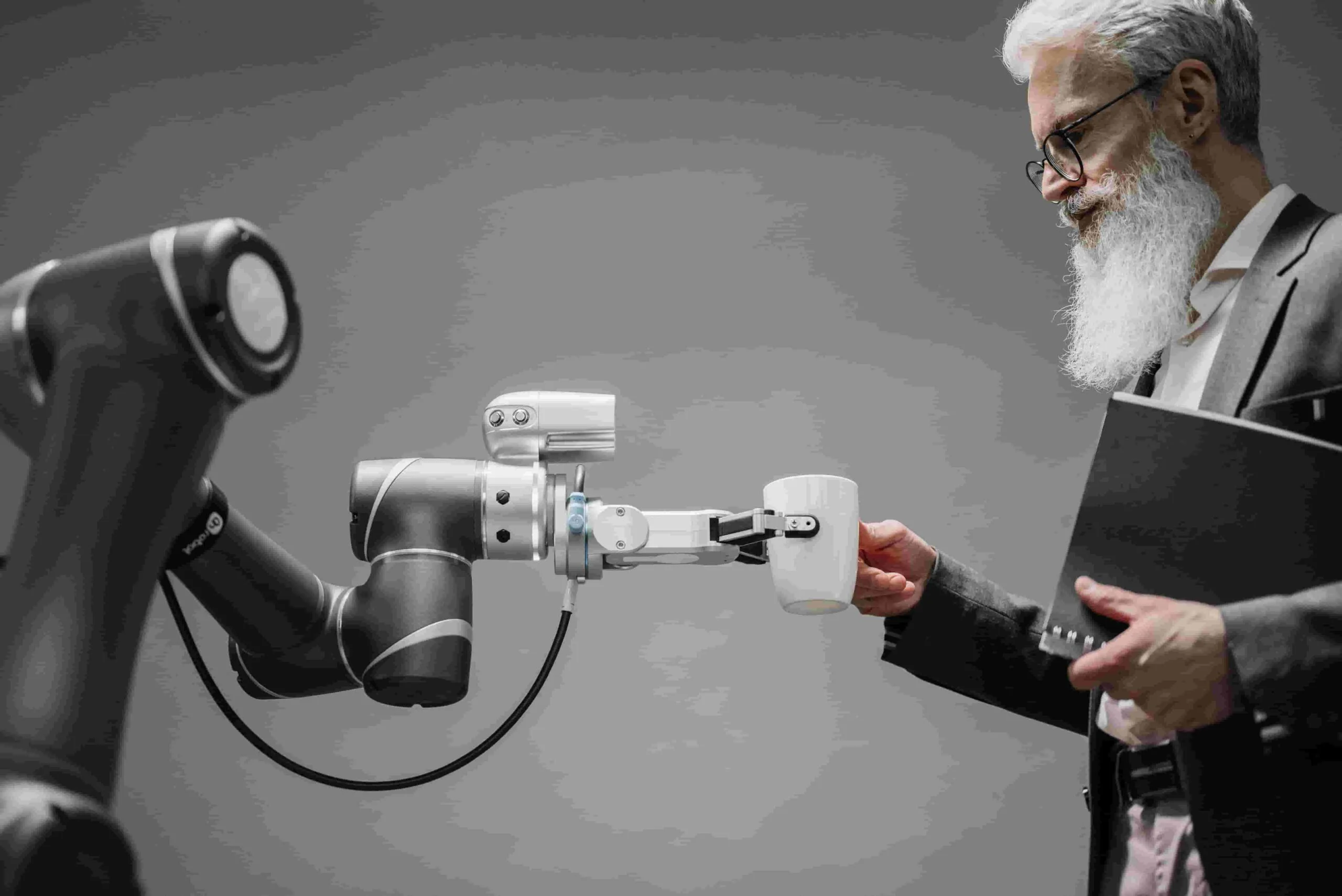
Current tools answer questions. Future AI agents will manage your inbox, book your meetings, track project deadlines, pull research, and coordinate between platforms all without you having to ask each time. They’ll work the way a genuinely capable assistant works, not the way a search engine works.
This is arguably one of the most significant future technology innovations in the pipeline. Businesses that figure out how to integrate autonomous AI agents into their operations early will have a structural advantage that compounds over time.
What’s Coming in Healthcare
This is the area I find most worth paying attention to.
AI already helps radiologists catch things in scans that human eyes miss. It helps researchers identify drug candidates faster. Those are real, documented improvements happening right now.
But emerging AI technologies are pushing toward something bigger: genuinely personalized medicine. Treatment plans tailored to your own biology. Wearable devices that monitor your health continuously and flag warning signs weeks before you’d feel anything. Earlier detection of diseases that are currently caught too late.
The future of artificial intelligence in technology is going to look like a lot of things but its impact on healthcare might be the most consequential of all of them.
Transportation, Smart Cities, and the Physical World
Self-driving vehicles have taken longer than early hype suggested. That’s worth acknowledging honestly. But the underlying technology is real, and it keeps improving.
More broadly, AI is being woven into physical infrastructure in ways that will change daily life traffic systems that adapt to congestion in real time, energy grids that optimize themselves, emergency response systems that get faster because they can anticipate instead of just react.
How AI will change technology in the next decade isn’t only about software. It’s about the physical world getting smarter. Smart city systems represent some of the clearest future technology trends powered by AI that are already moving from pilot projects into actual deployment.
The Parts Nobody Likes Talking About
Privacy is a real issue. These systems run on data, enormous amounts of it, and questions about who controls that data and how it gets used are not going to resolve themselves. Bias in AI models is also a genuine problem garbage in, garbage out, and sometimes the garbage is invisible until damage is already done.
Job displacement deserves honest conversation, too. AI will create new roles. It will also eliminate some existing ones. Pretending otherwise isn’t helpful.
None of this means AI is bad. It means it needs oversight, accountability, and people willing to push back when something isn’t working fairly.
The Practical Takeaway
Businesses and individuals don’t need to have everything figured out today. But next-generation technology rewards the people who start building familiarity now rather than waiting until the landscape feels settled.
It won’t feel settled. That’s kind of the point. The organizations that will lead over the next decade aren’t the ones with the biggest budgets they’re the ones willing to learn in motion.