What the Future of AI Might Look Like and How It Could Impact Our Daily Lives
Not long ago, Artificial Intelligence (AI) was something that belonged in a sci-fi movie. Today, it quietly powers our world from behind the scenes curating social feeds, fixing typos, mapping our everyday routes.
And that’s just the start. AI is evolving from a simple assistant into a predictive partner. No, this isn’t about robots taking over. It’s about building an invisible infrastructure that eliminates daily irritations and frees us up for creativity and strategy. Here is how that future actually shapes up.
How AI is Revolutionizing the Healthcare Industry
Think about your usual clinic visit. You get sick, book a slot, and the doctor treats your symptoms. For generations, medicine has been entirely reactive. However, the current impact of artificial intelligence on the dynamics of the healthcare industry is turning this formula upside down, moving us toward proactive, preventive care.
Clever machine-learning tools can scan complex medical images, X-rays, and MRI data in seconds. These algorithms detect microscopic problems that are easily missed by human eyes. As a result, doctors can detect chronic diseases or tumors in an early stage, years before you get sick.
AI also serves as an excellent medical copilot. It maps your unique DNA to health information from around the world, helping doctors personalize treatments for you. From precise robotic surgeries to wearables tracking your vitals 24/7, AI gives doctors the tools to actively protect human life.
Ways Neural Networks are Revolutionizing Scientific Research
Behind almost every new medicine or eco-friendly material coming out of modern labs, there is massive data crunching. Historically, finding a working drug molecule took decades of slow, expensive trial-and-error work. Today, there are countless ways neural networks are revolutionizing scientific research by completely cutting down these exhausting timelines.
Neural networks basically mimic how the human brain processes information. Instead of a scientist manually mixing compounds in a physical lab for years, these digital systems simulate millions of biological and chemical reactions on a screen within hours.
Take the mystery of “protein folding.” Mapping how a complex protein molecule shapes itself inside our cells used to take researchers a lifetime. Now, advanced AI models do it instantly. This shortcut opens doors for custom-engineered enzymes, stronger green materials, and fast drug discoveries, turning traditional lab research into a predictable digital workflow.
Will Robotics and Automation Replace the Human Workforce?
With technology moving this fast, a common question arises: Will robotics and automation replace the human workforce? This economic worry is entirely valid. But if you look closely at how industries actually change, the real answer is clear: our jobs will transform drastically, but humans are not becoming obsolete.
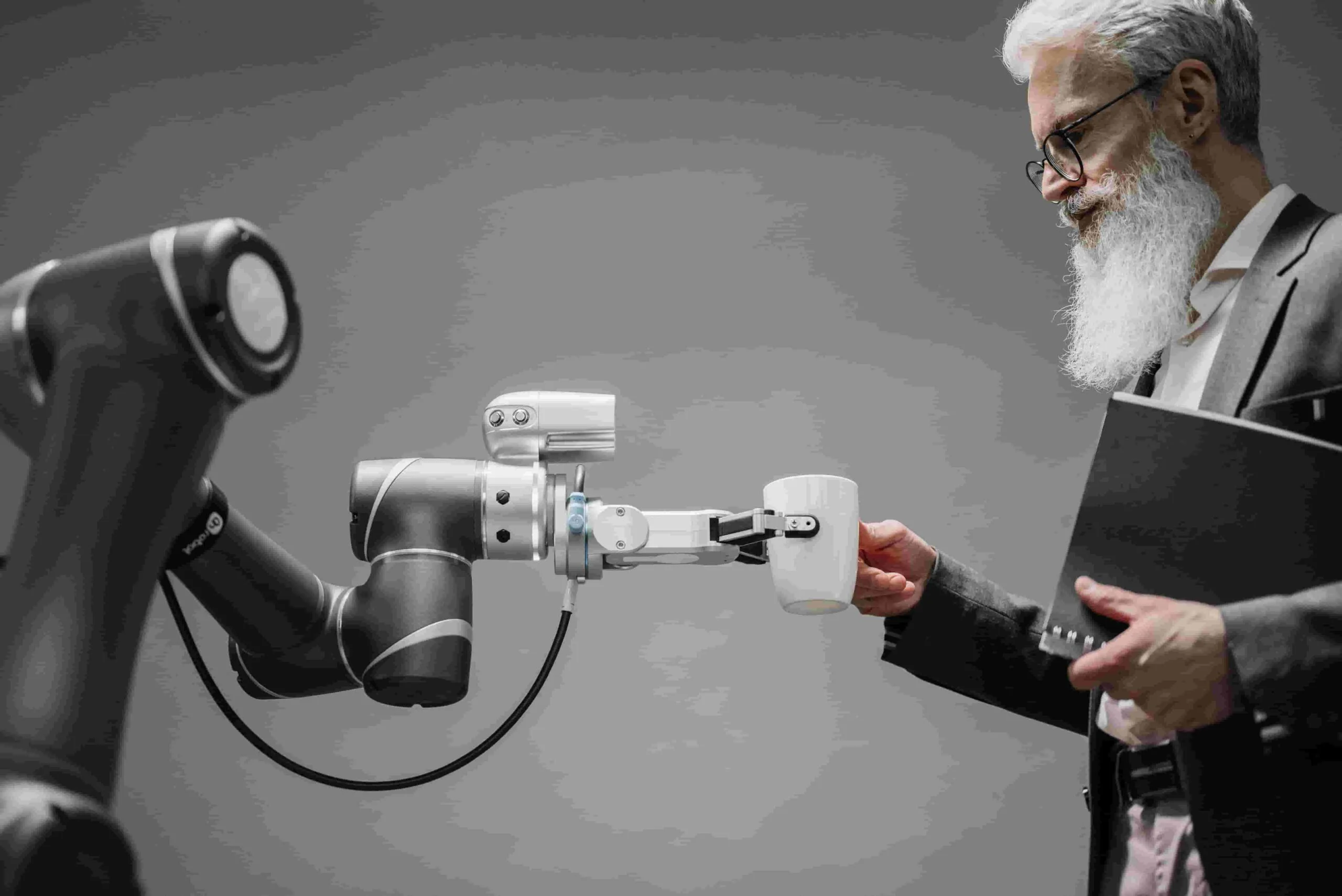
We are entering an age of deep partnership between humans and machines. Automation is designed to tackle what experts refer to as the “3Ds”: jobs that are Dull, Dirty, or Dangerous. Think data entry that’s always the same, heavy lifting on factory lines, or wading through mountains of paperwork.
When software programs and robotic arms assume these exhausting tasks, the human workforce is liberated for higher-level responsibilities. Our jobs are changing from generic doers to strategic directors, allowing us to focus on things machines can’t do: creative thinking, real emotional empathy, and big-picture strategy.
How Smart City Infrastructure Can Lead to Better Governance and Citizen Services
The neighborhoods we call home are getting a smart upgrade, too. Smart city infrastructure helps improve governance and citizen services in deep ways and makes our urban spaces cleaner, safer, and highly resource-efficient.
“Think of living in a city that runs on a single digital nervous system. Tiny IoT sensors embedded in roads, water pipes, and power grids are sending live updates back to central city management networks.
Smart Traffic: Traffic lights adjust to the number of cars on the street so you don’t get gridlock.
Proactive Utilities: Public utility systems detect underground leaks before a crisis occurs, so repair crews can reach them early.
Better Sanitation: Public trash bins signal to the city when they’re full, so garbage trucks only come out when necessary.
Biometric Identification Systems and Their Security Applications
Keeping modern smart cities secure will take much better protection than standard plastic badges or typed passwords. This is why modern biometric identification systems and their security applications are stepping up, replacing fragile keys with your unique human traits.
We are moving past basic fingerprint scanners. Next-generation biometrics look at multiple security layers simultaneously—combining quick facial scans, iris patterns, and even behavioral traits like your unique walk or typing rhythm.
In high-security spaces like digital banking, airport immigration, and power facilities, these systems make unauthorized entry virtually impossible. When these tools use local hardware encryption keeping your biological data safely locked on your own device instead of a central cloud database they let us move through our physical and digital worlds completely friction-free.
Frequently Asked Questions (FAQs)
Q1: Is my personal data safe within a smart city infrastructure? For smart city infrastructure governance, for citizen services to function safely, cities must use decentralized setups. This means using “edge computing,” where your data is processed locally on your own device rather than being dumped into a massive central cloud database.
Q2: How can we protect individuals if robotics automation replaces human workforce roles? Since robotics automation is replacing human workforce models targets predictable, manual labor, governments and corporations must invest in training workers to step into system oversight, tech maintenance, and AI management roles.
Q3: Why are neural networks preferred over traditional computers in scientific labs? Old-school computers only do exactly what a human programmer explicitly codes them to do. On the flip side, neural networks revolutionizing scientific research can look at a massive pile of messy, unorganized data and find hidden connections entirely on their own.
Q4: Can biometric identification systems be easily tricked or hacked? Modern biometric identification systems and their security applications use advanced “liveness detection.” They look for real blood flow and micro natural movements in your iris to instantly detect deepfakes or printed images.
The Constitution
The real story of artificial intelligence is not one of robots taking over the world, but of human augmentation. AI is the hidden, enabling, underlying layer of modern society, ensuring our safety, safeguarding our access, optimizing our cities, and bearing the weight of repetitive work. In the end, it exists to give us back our absolute most precious resource: time.