
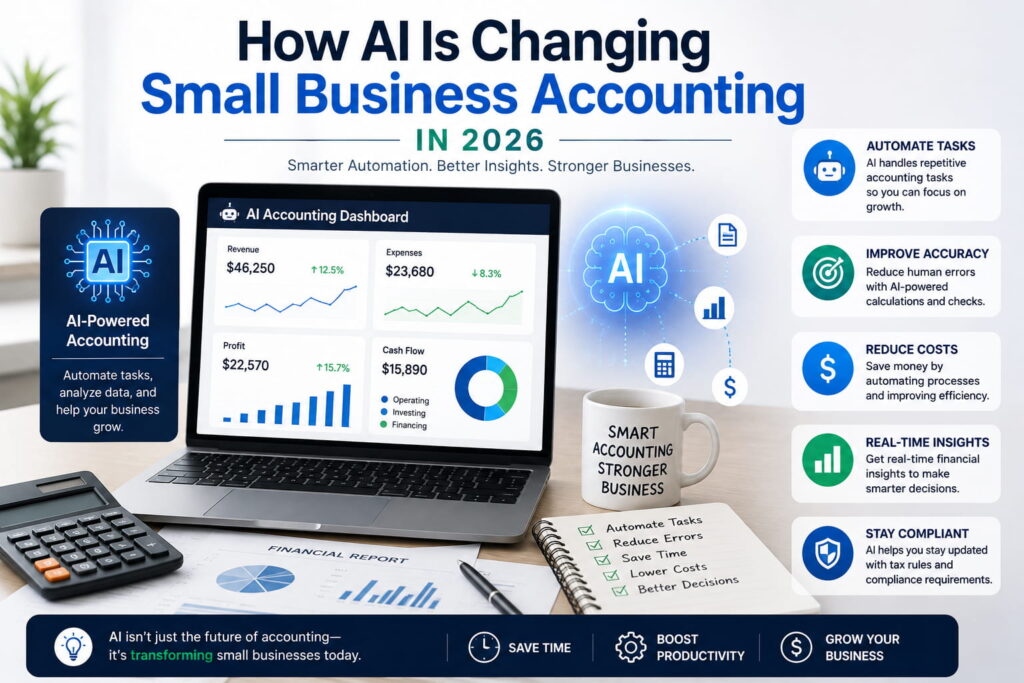
AI Is Changing
A friend of mine runs a small clothing brand out of Karachi, and until last year, her “accounting system” was a stack of receipts in a shoebox and a WhatsApp voice note reminder every month telling her to “sit and sort it out.” She switched to an AI-powered bookkeeping app in January, and by March, she’d cut her monthly reconciliation time from six hours to under one. That’s not a sales pitch that’s just what happens when software starts doing the boring, repetitive part of accounting for you.
Small business accounting used to mean either hiring someone, learning Excel formulas the hard way, or falling behind every quarter. AI hasn’t replaced the need for a good accountant, but it’s quietly taken over the parts of the job nobody enjoyed anyway.
Why This Matters for Small Businesses Specifically
Big companies have had automated finance systems for years. What changed in 2026 is that the same kind of tech expense categorization, invoice matching, anomaly detection is now available in tools that cost less than a monthly phone bill, sometimes free. That’s the real shift. It’s not that AI accounting is new; it’s that it finally trickled down to businesses that can’t afford a finance department.
Where AI Is Actually Making a Difference
| Accounting Task | What AI Now Does | Real Benefit |
|---|---|---|
| Bookkeeping | Auto-categorizes transactions from bank feeds | Saves hours of manual data entry each month |
| Invoicing | Generates and sends invoices, flags overdue ones | Fewer missed payments, less chasing clients |
| Expense tracking | Scans receipts and sorts them by category | No more shoebox full of paper receipts |
| Fraud detection | Flags unusual transactions in real time | Catches errors or fraud before they snowball |
| Cash flow forecasting | Predicts upcoming shortfalls based on patterns | Lets you plan instead of react |
| Tax prep support | Organizes deductible expenses automatically | Less scrambling before filing deadlines |
None of these tools file your taxes for you or make judgment calls a human accountant would make. What they do is remove the grunt work so whatever time you (or your accountant) spend is actually useful.
Bookkeeping: The Biggest Shift
This is where AI has changed the most for small businesses. Tools now connect directly to your bank account, read every transaction, and sort it into categories rent, supplies, marketing without you touching a spreadsheet. A few years ago, this still needed manual review every week. Now it mostly runs in the background, and you only step in when something looks off.
The catch? It’s not flawless. Categorization mistakes still happen, especially with vague transaction descriptions from banks. You still need to glance through it monthly, not blindly trust it.
Catching Problems Before They Become Expensive
One thing that surprised me while researching this is how good AI has gotten at spotting patterns that don’t fit a duplicate payment, an invoice sent twice, a subscription that quietly doubled in price. These aren’t dramatic fraud cases most of the time; they’re small, expensive mistakes that used to slip through until the year-end audit. Catching them in real time is a genuinely useful upgrade, not just a nice-to-have.
What AI Still Can’t Do
It can’t tell you whether a big purchase makes sense for your specific business goals. It can’t negotiate with the tax office on your behalf, and it definitely shouldn’t be your only line of defense during an audit. Treat AI accounting tools as a very capable assistant, not a replacement for a real accountant when the stakes are high annual filings, business loans, or anything with legal weight.
For a broader look at how automation is reshaping day-to-day business tasks beyond just finance, our Automation & Workflows section covers that in more depth. And if you’re still exploring which free tools are worth trying first, we compared a few in Best Free AI Tools for Small Business.
Getting Started Without Overhauling Everything
You don’t need to switch your entire accounting system overnight. Start with one piece receipt scanning or invoice automation are the easiest wins and see how much time it actually saves before going further. Most small businesses that try to automate everything at once end up frustrated by the learning curve. One change at a time works better.
Final Thoughts
AI isn’t turning small business owners into accountants overnight, and it’s not trying to. What it’s doing is quietly removing the parts of bookkeeping that used to eat entire weekends sorting receipts, chasing invoices, spotting weird transactions. That leaves more room for the decisions that actually need a human brain behind them.
FAQs
1. Can AI completely replace my accountant? No, and it shouldn’t. AI handles repetitive data work well, but decisions around taxes, loans, or legal compliance still need a qualified accountant’s judgment.
2. Is AI accounting software safe for small business data? Reputable tools use bank-level encryption, similar to what online banking apps use. Still, it’s worth checking a tool’s security policy before connecting your bank account.
3. Do I need accounting knowledge to use these tools? Not much. Most are built for non-accountants, though a basic understanding of your own expenses and income categories helps you catch mistakes faster.
4. How much time does AI bookkeeping actually save? It varies by business size, but many small business owners report cutting manual bookkeeping time by more than half once transactions are automatically categorized.
5. Are free AI accounting tools good enough, or do I need a paid plan? Free plans work fine for very small operations with low transaction volume. Once you’re processing dozens of transactions weekly, a paid plan usually pays for itself in saved time.