
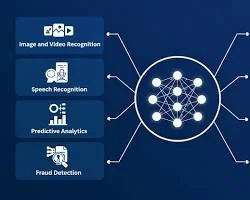
Nobody’s waiting for machine learning to arrive. It already did quietly, without much fanfare, years ago. The version most people picture when they hear “AI” or “machine learning” is some sleek, futuristic thing. Humanoid robots. Systems that think. The Terminator, basically.
The actual version is less dramatic and, honestly, more impressive. It’s the reason your card didn’t get declined when you bought something unusual last weekend. It’s why a warehouse somewhere had exactly the right amount of stock before the demand spike hit. It’s working constantly, in the background, across almost every sector you interact with.
So let’s skip the speculation and talk about where machine learning applications are actually running today.
Your Bank Is Already Using It Probably More Than You Think
Traditional fraud detection was essentially a checklist. Transaction over a certain amount? Flag it. Purchase from an unusual country? Block it. The rules were static, and anyone who figured them out could work around them including fraudsters.
The other problem was false positives. Legitimate customers got their cards blocked while traveling or buying something slightly outside their usual routine. Annoying and bad for trust.
Machine learning in finance replaced that checklist with something more nuanced: a dynamic profile built around each account. Every transaction adds to a picture of what “normal” looks like for you typical locations, usual amounts, time patterns, merchant categories. Deviations get scrutinized. Things that fit go through.
How machine learning is used in fraud detection gets interesting at the micro-level. Fraudsters frequently test stolen card details with very small purchases a $1.50 charge, easy to miss on a statement. Invisible to a human analyst reviewing individual accounts. But machine learning models scan patterns across thousands of accounts simultaneously. Three cards, all compromised in the same breach, all showing a $1.49 charge at the same merchant on the same day caught. Fast.
The improvement isn’t just catching more fraud. It’s bothering fewer legitimate customers while doing it.
Making Business Decisions Before the Problem Shows Up
There’s a version of supply chain management that runs entirely on hindsight. Something goes wrong, you figure out why, you adjust. Repeat indefinitely.
Predictive analytics tools break that cycle by building forecasts based on what’s likely to happen next combining historical data with real-time external signals.
A retailer using demand forecasting isn’t just looking at last November’s sales to plan this year’s inventory. Their system is also pulling local weather forecasts, regional economic signals, social media trends, and competitor pricing. All of it gets weighted to produce recommendations more accurate than any analyst could produce manually.
How predictive analytics improves business decisions is just as clear in manufacturing. Heavy industrial equipment generates constant sensor data temperature, vibration, output efficiency. A machine learning model trained on that data learns what normal operation looks like for each machine. When a motor starts running hotter, or a vibration pattern shifts in a specific way, the model flags it before it becomes a breakdown.
Unplanned downtime in industrial settings can cost hundreds of thousands per day. Catching the early warning and scheduling maintenance on a quiet Tuesday instead of dealing with an emergency during peak production is a meaningful operational difference.
The Quiet Work Happening Every Time You Open an App
This one’s less dramatic but probably the machine learning application most people encounter most often.
Every major streaming platform and e-commerce site runs some version of a recommendation engine. They go beyond “user watched three crime dramas, show more crime dramas.”
What actually gets tracked: how long you hovered on a thumbnail before clicking, whether you finished something or dropped off twenty minutes in, what you searched but didn’t click on. These signals get mapped against patterns from millions of other users to build a continuously updating model of what you’ll engage with next.
Better recommendations mean longer sessions, more purchases, and higher retention. From a user perspective, the app just keeps showing things you actually want. That’s one of the highest-leverage machine learning applications a consumer business can run.
Why It Spread Across Industries So Fast
Finance, supply chain, consumer apps different problems, same underlying logic: find patterns in large datasets that humans can’t reliably spot at scale, then use those patterns to make better decisions faster.
That generalizability is why adoption happened quickly. You’re not building new technology for each industry you’re applying the same toolkit to different data.
Frequently Asked Questions
1. What are the most common real-world machine learning applications right now? Fraud detection in banking, demand forecasting in retail and manufacturing, recommendation engines on streaming and e-commerce platforms, predictive maintenance in industrial settings, and credit risk scoring. These are live systems at scale not experimental pilots.
2. How does machine learning in finance detect fraud without blocking legitimate transactions? By building individual behavioral profiles rather than applying universal rules. The system learns what’s normal for a specific account and flags deviations. A transaction that would trigger a static rule for one user might be completely typical for another and the model accounts for that.
3. What are predictive analytics tools, and how do they differ from standard dashboards? A dashboard shows what has already happened. Predictive analytics tools forecast what’s likely to happen next, combining historical patterns with current external signals. The output is a recommendation for something you haven’t had to react to yet.
4. How does predictive analytics improve business decisions in manufacturing? Mainly through predictive maintenance. Sensor data feeds continuously into models that establish what normal operation looks like. Early deviations rising heat, shifting vibration get flagged before they become failures, allowing scheduled repairs instead of emergency shutdowns.
5. Do smaller businesses have access to these machine learning applications? More than most assume. Cloud platforms offer pre-built ML tools that don’t require in-house data science teams. The data scale differs, but core applications forecasting, anomaly detection, customer behavior modeling are available at price points that work below the enterprise level.
Conclusion
The organizations using machine learning well aren’t necessarily the ones with the biggest budgets or the flashiest announcements. They’re the ones who identified a specific, real problem fraud slipping through, inventory mismatches, customer churn and built or deployed a model to address it directly.
Machine learning applications have become table stakes in most major industries. Not a differentiator anymore, just a requirement. What separates the companies getting real value from those just checking a box is how precisely they’ve connected the technology to an actual operational problem worth solving.
That’s the less exciting version of the story. It’s also the true one.